Under the Gazebo: Six Honest Lessons from My First Makers’ Market
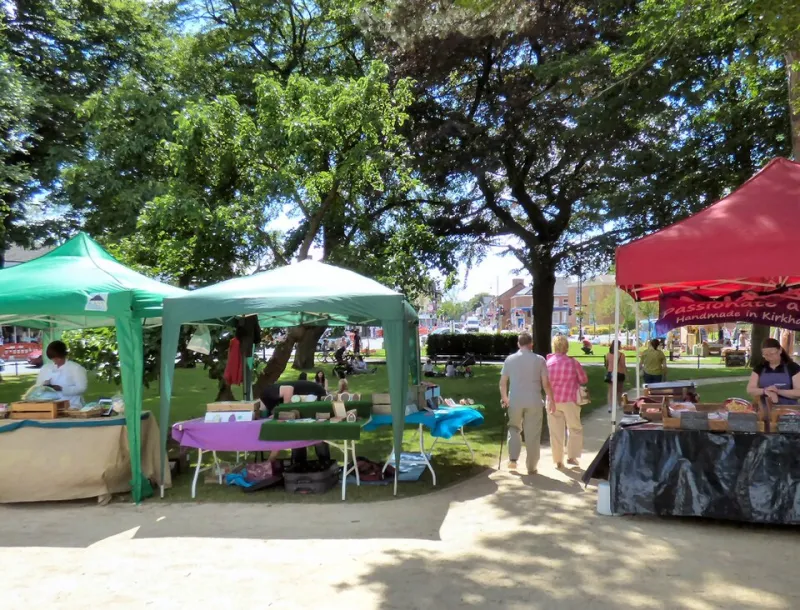
Photo: Gerald England , CC BY-SA 2.0, via Wikimedia Commons
A few weekends ago I stood under a borrowed gazebo in a market square, watching the sky do that very British thing where it cannot decide between drizzle and proper rain. I had a folding table, a flask of tea, a card reader and a box of prints. I also had a quiet hope that people would somehow understand my work instantly, which is not how markets work at all.
By the end of the day I had sold a few things, met some lovely people and learned more about how my work communicates than I had in weeks of tweaking my website. Here are the six things I wish I had known before hiring that stall in 2026.
1. The stall is a stage set, not a shelf
My first plan was simple: put things on the table, price them, smile. That lasted about ten minutes. A flat grid of prints on a flat table is hard to read from the other side of a walkway, especially when people are clutching umbrellas and trying not to tread on a dog.
What worked was height. A couple of sturdy boxes under a plain cloth, one large hero piece at eye level and a smaller tray of things people could pick up. The stall needed a clear front edge, a readable title and enough space that someone could step in without feeling trapped. It is not about making a mini gallery. It is about giving a passer-by one obvious place to look first.
2. Price with your eyebrows, not just your spreadsheet
I had done the maths: stall fee, materials, card reader, a bit for the hours. What I had not done was practise saying the prices out loud. That sounds daft, but it matters. If you hesitate, the customer hesitates too.
What helped was a simple ladder: a few small items under a tenner, a middle range that most people could justify and one or two larger pieces that acted as anchors. Clear labels, written in proper sentences, did more than I expected. So did a bundle price for two prints, because people like a small excuse to buy the second thing. I did not discount in a panic during the quiet spells. That is a slippery slope, and the quiet spell is not a verdict on your work.
3. Weatherproofing is not boring, it is the whole game
I say this with the authority of someone who watched a gust of wind try to take a print rack for a walk. UK markets are not indoor shops. You need weights, spare pegs, a waterproof cover, a box that closes properly and a plan for what happens when the rain comes in sideways.
Paper work needs particular care. Keep prints in a lidded box, not in open baskets that catch the drizzle. Tape down your labels. Take a spare cloth for the table and a spare pair of socks for you. It sounds unglamorous because it is. But a dry print and a calm stall look far more professional than a soggy display and a frantic owner.
4. The chat is the research
The best part of the day was not the sales. It was the questions. People asked what the work was made from, where the places in the prints were and whether I did commissions. They also said things like 'I like the small ones but the big one is a bit much for our hallway', which is exactly the sort of sentence you cannot get from a website analytics dashboard.
I started noting the phrases that came up again and again. Not to change the work to please everyone, but to understand what was landing. A market stall is a live test of what your portfolio communicates before anyone reaches your website. If people keep asking what a piece is, your labels are doing too little. If they keep walking past the same section, your display is telling them to. Listen to the awkward questions. They are free audience research.
5. The awkward bits nobody mentions
Nobody tells you about the toilet situation, the parking, the neighbour who plays music slightly too loud or the long stretch after lunch when the square goes quiet. Bring snacks, water and a book you do not mind abandoning every thirty seconds. Have change, even if you take card. Know the council rules about what you can put outside your pitch.
And take a break. I did not, and by four o'clock I was explaining my own work as if I had forgotten how it was made. A ten-minute walk around the block is not lost selling time. It is what stops you from becoming a slightly desperate gazebo person.
6. Make the pack-down a review
When the stall came down, I did not just shove everything in the car. I wrote a quick note on my phone: what sold, what people picked up but did not buy, which questions came up, which display bit worked and which was a waste of table space. That list has already changed how I sequence my portfolio.
The market did not tell me whether my work is good. It told me how it behaves in the wild. That is a different and much more useful thing. If you are taking a stall in 2026, go with a decent gazebo, a clear price list, a waterproof box and a willingness to listen. The tea helps too.